Why Your To-Do List Isn't Working (And How to Fix It)
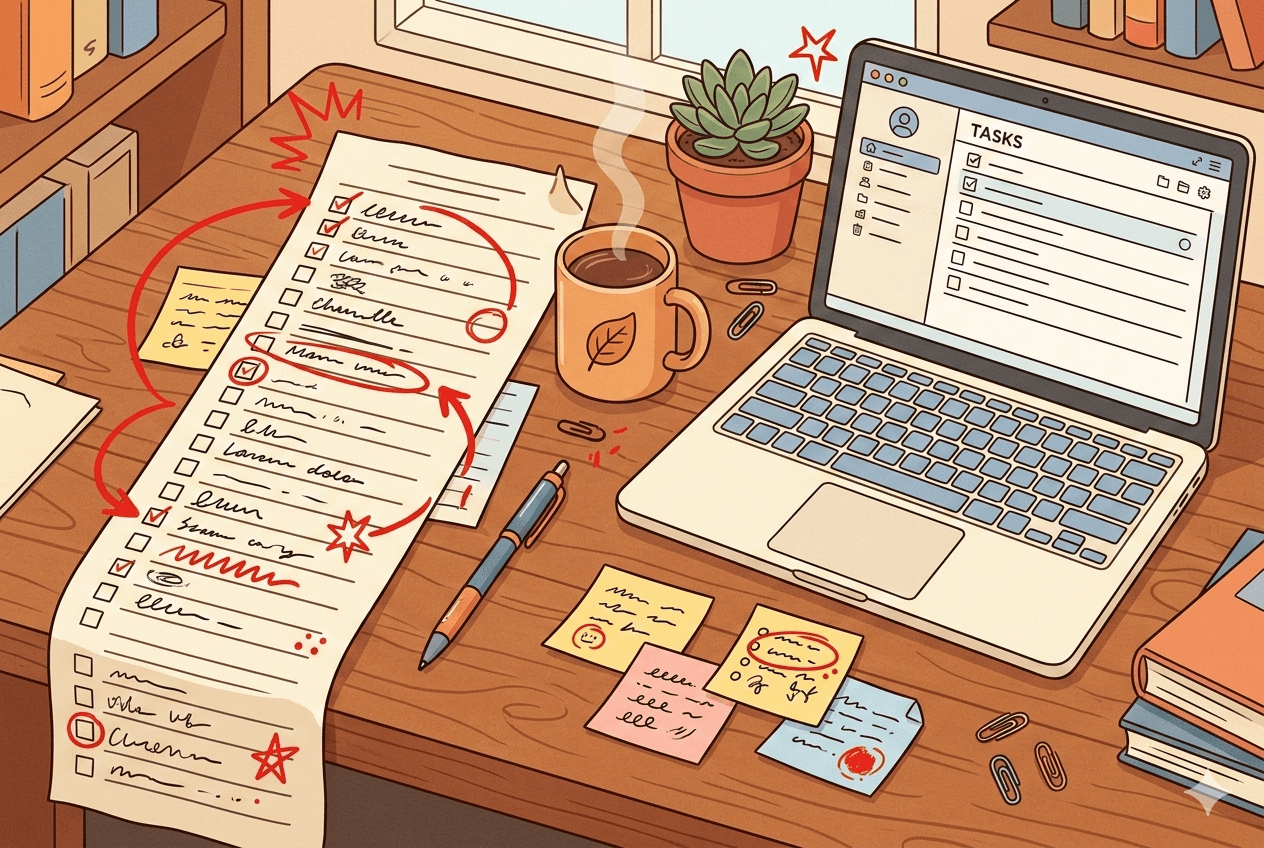
You made the list. You even color-coded it. And yet, by 3pm you're staring at twelve unchecked items wondering where the day went.
You're not lazy. You're not bad at your job. Your to-do list just has a few common design flaws that almost everyone falls into. The good news: they're surprisingly easy to fix.
The List Is Too Long (and Too Vague)
The most common to-do list mistake is treating it like a brain dump rather than a daily plan. When your list has 40 items on it, your brain quietly gives up before you even start. It's not motivating. It's paralyzing.
The fix: separate your capture list (everything you might need to do someday) from your daily list (what you'll actually do today). Your daily list should have no more than three to five real tasks. Not "work on report." Not "emails." Actual, specific, completable actions like "draft intro paragraph for Q1 report" or "reply to Sarah about invoice."
This distinction alone can transform how productive you feel by end of day. Completing three things feels like a win. Completing three out of forty feels like failure, even if the three were the most important ones.
You're Not Accounting for How Long Things Actually Take
Here's a trap almost everyone falls into: writing "fix the website bug" as if it takes the same amount of mental energy and time as "reply to Slack message."
Tasks are not equal. A list of ten items might represent two hours of work, or it might represent twelve. When you write them all down as flat bullet points, you lose that context entirely.
A simple upgrade is to add rough time estimates next to your tasks. Even just a "15 min" or "2 hrs" label forces you to be honest with yourself about what fits in a day. Suddenly, your eight-item list becomes an eight-hour list, and you realize you actually need to push three things to tomorrow.
This is a core principle of good task management productivity: knowing your constraints before you start, not after you've already overcommitted.
Nothing Has a Real Priority
When everything is on the list, nothing feels truly urgent. And when nothing feels urgent, your brain defaults to the easiest or most interesting task rather than the most important one.
A classic approach is to identify your single MIT: Most Important Task. This is the one thing that, if you did nothing else today, would make the day a success. Put it at the top. Do it first, before email, before meetings, before checking your phone.
It sounds simple because it is. But most people never actually do it because their list is formatted as one big undifferentiated blob of obligations.
Another useful framework: before you close your laptop for the night, write down tomorrow's top three priorities. You'll sleep better, and you'll start the next morning with intention instead of anxiety.
You're Not Reviewing or Resetting
A to-do list is a living document, not a permanent record. If you haven't looked at something on your list in two weeks, it's either no longer relevant or it's a project masquerading as a task.
A weekly review takes about fifteen minutes and is one of the highest-leverage habits you can build. Go through everything, archive what's done, break down anything too vague or too big, and re-prioritize what's left. This keeps your list from becoming a graveyard of good intentions.
Without this habit, even a beautifully organized list devolves into noise within a few days.
You're Using the Wrong Tool for the Job
A to-do list and a notes document are different things, but many people shove both into the same place. Meeting notes, project context, half-formed ideas, and actual next actions all piled into one long text file.
The result is a system that's hard to trust. You're never sure if you've captured everything or if something fell through the cracks.
A better approach: use a dedicated task management app that lets you separate notes from tasks, keeps everything in one place, and actually helps you focus on what's next. Apps like Superlist are built exactly for this. You can capture tasks, write notes alongside them for context, get AI-generated meeting summaries so you never lose track of action items, and see everything in a clean, organized view across all your devices. It's the kind of setup that makes your list feel like a trusted system rather than a stress source.
Getting More Done Starts With a Simpler List
The goal isn't a longer list. It's a more honest one.
Pick fewer tasks. Be specific. Add time estimates. Identify your single most important thing each day. Review weekly. And use a tool that's designed to help you think clearly rather than just capture everything you're anxious about.
Your to-do list should feel like a plan, not a punishment. A few small changes to how you build it can make an enormous difference in how much you actually get done, and how good you feel at the end of the day.